
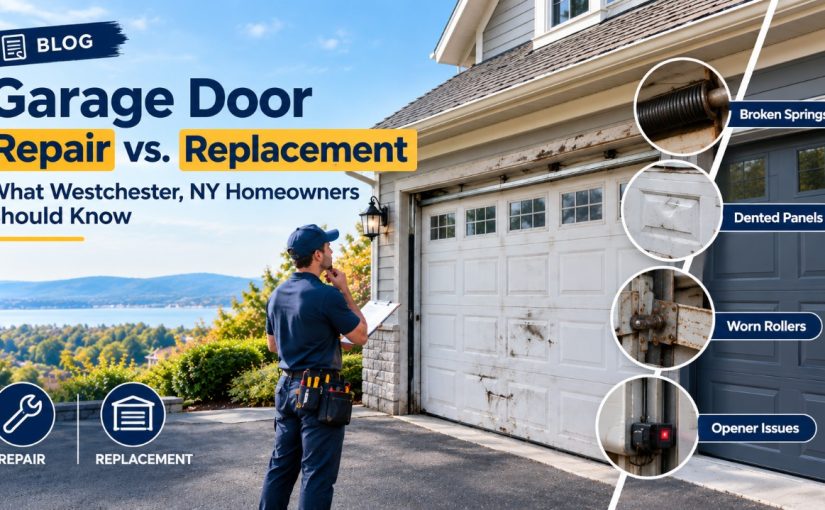
A garage door operates thousands of times every single year. It moves up and down quietly, serving as the largest moving structural component in your residence while protecting vehicles, stored equipment, and primary entrance points into the house. Across Westchester County, severe winter freezing spells, heavy snow accumulation, and humid summer months put continuous physical pressure on these heavy exterior assemblies. When an overhead door suddenly jams halfway open, makes alarming grinding noises, or displays visible panel sagging, homeowners face an immediate choice. Deciding whether to repair existing mechanical components or replace the entire setup requires evaluating immediate repair bills against long-term security, energy insulation, and daily convenience.
Our team at Action Lock & Door works directly with residential property owners across Westchester, Scarsdale, Yonkers, and White Plains. We see firsthand how drastic seasonal weather changes impact mechanical door hardware over time. Choosing the right path comes down to evaluating safety risks, total mechanical wear, thermal insulation needs, and overall budget expectations.
Understanding Common Garage Door Problems in Westchester
Overhead garage doors rely on a complex network of counterbalancing springs, steel cables, tracks, rollers, and electrical drive motors. When a single component experiences physical failure, the entire assembly loses structural balance and operating capacity. Identifying why these parts fail helps clarify what level of professional attention is required.
High-Tension Spring Snapping
Garage door springs bear the heavy lifting load of the entire panel assembly. Cold New York winters cause steel springs to expand and contract repeatedly. This constant temperature cycling creates metal fatigue over time. Eventually, a spring snaps with a sudden loud bang, leaving the door far too heavy for manual or motorized opening.
Bent or Misaligned Tracks
Vertical and horizontal metal tracks guide heavy door rollers smoothly up and down. Accumulation of road salt residue, accidental vehicle impacts, or loose wall mounting hardware can pull tracks out of proper alignment. Operating a door on bent tracks damages panel edges and can cause the door to fall off its rails entirely.
Worn Rollers and Snapped Lift Cables
Roller bearings wear down after years of continuous spinning, causing the door to vibrate excessively or stick mid-cycle. High-tension lift cables can also fray or snap. Operating a system with frayed cables is extremely dangerous because the door can drop suddenly without warning.
Weathered or Rotted Panel Sections
Wood garage doors absorb humidity during damp months, leading to wood rot, soft spots, and peeling paint. Steel doors sustain rust along bottom sections where road salt and melting winter snow accumulate. Warped or rusted panels compromise home security and let cold drafts inside.
When Garage Door Repair Makes the Most Sense
Fixing targeted components is usually the most practical and budget-friendly choice when damage remains localized and the core structure remains sound. Homeowners can save significant money by replacing specific wearable parts rather than purchasing a whole new system.
Key Scenarios That Call for Repair:
- The Door Is Under Ten Years Old: Overhead door systems installed within the past decade generally possess plenty of remaining operational lifespan. Replacing worn components restores complete function without needing a full unit replacement.
- Isolated Mechanical Failures: Replacing a snapped spring, broken cable, worn roller set, or loose hinge is straightforward for experienced technicians. These targeted fixes extend system longevity without high replacement costs.
- Minor Single-Panel Damage: If a backing car lightly dents one bottom panel while the remaining sections stay perfectly aligned, replacing that specific section keeps repair expenses low.
- Photo-Eye Sensor Misalignment: Automatic openers refuse to close if floor-level safety sensors become dirty or misaligned. Cleaning the lenses or straightening mounting brackets restores normal door operation instantly.
- Unbalanced Door Movement: An unbalanced door places heavy strain on the opener motor. Technicians adjust spring tension quickly, restoring smooth movement across the entire track system.
Choosing professional Garage Door Repair in Westchester solves immediate functional breakdowns efficiently, protecting your household budget while preserving your existing equipment.
When Replacing Your Garage Door Is the Better Choice
Certain mechanical situations make continuous repairs impractical over time. Old, heavily damaged, or energy-inefficient doors create recurring safety risks and inflate monthly heating bills. Replacing the entire assembly offers long-term dependability and complete peace of mind.
Clear Signs That Point to Total Replacement:
- System Age Exceeds 15 to 20 Years: Older doors lack modern insulation standards, pinch-resistant panel designs, and advanced safety features. Spending money on frequent fixes for aging systems yields diminishing returns over time.
- Multiple Damaged or Out-of-Print Panels: Replacing multiple panels often costs nearly as much as buying an entirely new door setup. Matching colors and panel patterns on older models can also prove nearly impossible.
- Frequent Breakdown Cycles: If your door requires professional service calls multiple times a year, internal mechanical systems are reaching the end of their useful lifespan.
- High Heating and Cooling Bills: Uninsulated doors allow freezing winter air directly into attached garages, chilling adjacent living spaces. Modern insulated replacement doors feature solid polyurethane cores that lock heat inside.
- Structural Frame Warping or Sagging: Heavy structural sagging damages track alignments beyond safe mechanical adjustment. Replacing the entire assembly protects home security and structural integrity.
- Curb Appeal and Property Value Upgrades: Installing a modern garage door dramatically refreshes your home exterior. It delivers one of the highest return-on-investment ratios of any residential renovation project in New York.
Comparing Costs, Safety, and Energy Value
Deciding between these options requires analyzing immediate repair outlays against future energy savings, noise reduction, and home safety enhancements.
Applying the 50 Percent Rule
Industry technicians rely on a simple financial rule. If the estimated cost of repairs exceeds 50 percent of the total price for a new garage door installation, purchasing a replacement is the smarter financial choice.
Modern Safety and Security Features
Modern garage door setups include crucial safety technologies that older systems lack:
- Auto-Reverse Infrared Optics: Sensors instantly stop and reverse door movement if pets, children, or objects cross the doorway path.
- Rolling Code Transmitters: Security technology changes remote transmitter access codes after every press, stopping digital code interception by unauthorized parties.
- Pinch-Resistant Panel Joints: Specially shaped panel seams prevent fingers from getting trapped during door movement.
- Integrated Battery Backups: Keeps overhead doors fully operational even during regional power outages across Westchester neighborhoods.
Energy Efficiency and Noise Reduction
Attached garages share interior walls with bedrooms and kitchens. High-R-value insulated doors prevent cold winter drafts from lowering indoor temperatures, helping home heating systems run efficiently during cold spells. Furthermore, modern nylon rollers and belt-drive openers reduce operating noise significantly compared to noisy older chain setups.
Essential Maintenance Tips to Extend Garage Door Life
Consistent preventative care prevents sudden mechanical failures and delays the need for major replacements. Simple seasonal checks keep moving parts operating smoothly year after year.
Practical Care Steps for Homeowners:
1. Visual Inspections: Regularly examine springs, cables, rollers, and mounting brackets for visible rust, fraying, or loose bolts.
2. Strategic Hardware Lubrication: Apply a dedicated silicone or white lithium lubricant to steel springs, hinges, and roller bearings twice a year. Avoid thick grease that collects grit.
3. Monthly Safety Auto-Reverse Tests: Place a wooden block on the ground in the door’s closing path. Lower the door automatically. It should touch the block and immediately reverse upward.
4. Clean Photo-Eye Optics: Keep safety sensor lenses clear of dust, cobwebs, and yard dirt using a damp microfiber cloth.
5. Inspect Bottom Seals: Check the flexible rubber weather seal along the bottom edge. Replace cracked or hardened seals to block cold wind and pests.
Why Professional Service Matters for Westchester Properties
Garage door counter-springs store extreme mechanical energy under high tension. Attempting severe DIY repairs on high-tension springs, tracks, or lift cables risks personal injury and structural property damage.
Our team at Action Lock & Door brings more than 29 years of practical field experience to every residential project across Westchester County. Licensed technicians evaluate frame alignment, calculate precise spring tension requirements, verify local building safety compliance, and offer honest service recommendations tailored to your goals.
Relying on experienced professionals for Garage Door Repair in Westchester guarantees your door functions smoothly, safely, and dependably through every season, giving you complete confidence in your home security.
Conclusion: Choosing the Right Solution for Your Westchester Home
Maintaining a secure, functional overhead door is essential for home safety, energy efficiency, and daily convenience. Deciding between targeted repairs and full system replacement depends on component age, structural condition, safety needs, and long-term financial plans. Minor alignment issues, broken springs, and worn cables are quickly fixed through expert service. Severe structural rot, sagging frames, and outdated safety mechanisms make full replacement the wiser investment.
Partnering with local experts ensures your property stays protected and visually appealing. Our specialists at Action Lock & Door are always ready to assess your door, provide clear recommendations, and deliver reliable solutions tailored to your home.
Frequently Asked Questions
How long does a garage door opener motor last?
Most quality garage door opener units operate reliably for 10 to 15 years with basic maintenance and routine gear lubrication.
Can I replace just one panel on my door?
Yes, single panel replacements work well if the original model remains in production and surrounding panels show minimal weather fading or discoloration.
Does a new garage door improve home resale value?
Yes, replacing an outdated overhead door delivers an exceptional return on investment by instantly updating property appearance and boosting buyer interest during home sales.
What causes a garage door to squeal or grind?
Grinding noises typically indicate dry roller bearings, unlubricated springs, or misaligned steel tracks rubbing against moving wheels during opening cycles.